Important notice for visitors to the Courthouse in Duluth: effective Monday, March 30, the 2nd Street entrance will be closed to the public. Visitors may enter the building through the main entrance off the Civic Center/Priley Drive or via the skywalk from the 3rd Street ramp.  
Traffic Safety


TrafficSafetyPic

The first priority listed in the St. Louis County Public Works Department mission statement is safety. St. Louis County believes that traffic-related deaths on St. Louis County roads are unacceptable. This belief has led St. Louis County to be an active supporter and participant in the Minnesota Toward Zero Deaths initiative. St. Louis County has begun applying the principles of data-driven safety analysis in both its traffic safety programs and roadway projects. Watch this YouTube video about the benefits of Data-Driven Safety Analysis featuring Minnesota as a case study:


If you are aware of an issue on a county road that you believe is unsafe, please contact St. Louis County at 218-625-3830 and ask to speak with the traffic engineer.

County Road Safety Plan

St. Louis County, in cooperation with the Minnesota Department of Transportation State Aid Division, has developed the County Road Safety Plan for St. Louis County roads. This plan identifies county road segments, curves and intersections that are at-risk for a future serious crash and recommends specific safety projects for each at-risk location.

The County Road Safety Plan is used to access federal funding from the Highway Safety Improvement Program.
Typical safety projects in the County Road Safety Plan include:
  • Edgeline rumble strips
  • Centerline rumble strips
  • Roadway lighting at intersections
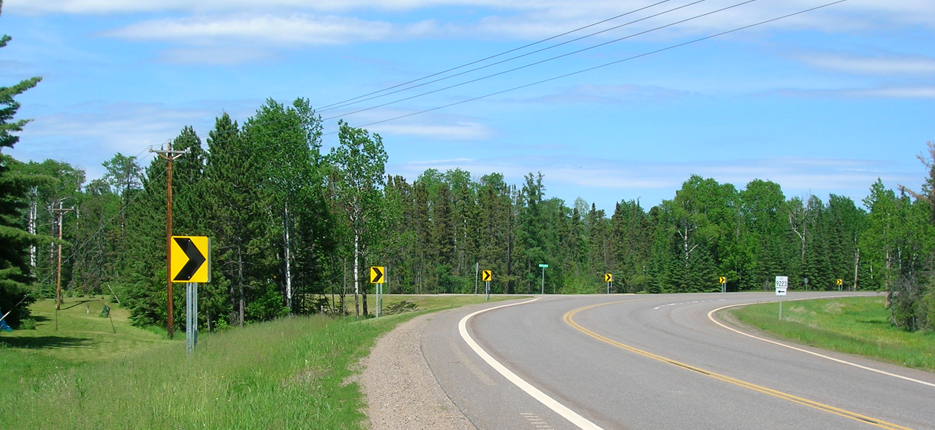
  • Chevron warning signs in curves
  • Enhanced edgelines
  • Dynamic intersection warning systems
  • Enhanced red light enforcement

Work Zone Safety

"Nobody likes statistics. Be aware of work zones and stay alive."

Orange barrels, cones and reflective vests come back to our roadways every year. Contrary to common belief, it is the motor vehicle occupants, not construction workers, who are most likely to be killed or injured in a work zone crash. Distracted or inattentive driving, combined with illegal or unsafe speed, are the top contributing factors to serious work zone crashes.

Here are some common sense tips to avoid a work zone crash, and avoid becoming a statistic. Because the numbers show that most injuries that occur in a work zone are to the motorists and their passengers.
  • Slow down.
  • Set down your phone.
  • Pay attention.
  • Leave extra space between you and the vehicle in front of you.
  • Watch for vehicles that may brake suddenly.
  • Realize that work zones may lack normal safety features such as wide shoulders, guard rails, lane markings and reflective signs.
  • Follow the directions of flaggers.
  • Be patient.
  • Allow extra time.

St. Louis County's goal is for everyone to arrive safely at their destination. We want motorists to get from point A to point B, and workers to make it home at the end of their work day.

Additional resources about work zone safety can be found on the Minnesota Department of Transportation and National Work Zone Safety Information Clearinghouse websites.

SS4A Safety Action Plan

How many traffic fatalities are acceptable? To put it another way, how many traffic fatalities are acceptable in your family? St. Louis County believes all traffic fatalities are unacceptable and preventable. Therefore, St. Louis County’s goal is zero traffic fatalities. The Minnesota Toward Zero Deaths (TZD) initiative has been a leading resource to help accomplish this goal. The Minnesota TZD mission is to create a culture for which fatalities and serious injuries are no longer acceptable through the integrated application of education, engineering, enforcement and emergency medical and trauma services by using data driven efforts, best practices and research.

St. Louis County received federal funds from the Safe Streets and Roads for All (SS4A) Program to develop a new Safety Action Plan (SAP) with a focus on county roads. This SAP focuses on county roads outside of the Duluth-Superior Metropolitan Interstate Council (MIC) planning area. The MIC also received funding from the SS4A Program to develop an SAP for the MIC planning area which will be a separate effort from St. Louis County’s SAP.

St. Louis County’s SAP will guide investments to improve traffic safety and support the goal of reaching zero traffic fatalities.

Contact